When Fire Protection Systems Are Out of Service: Why Immediate Reporting Can Save Lives
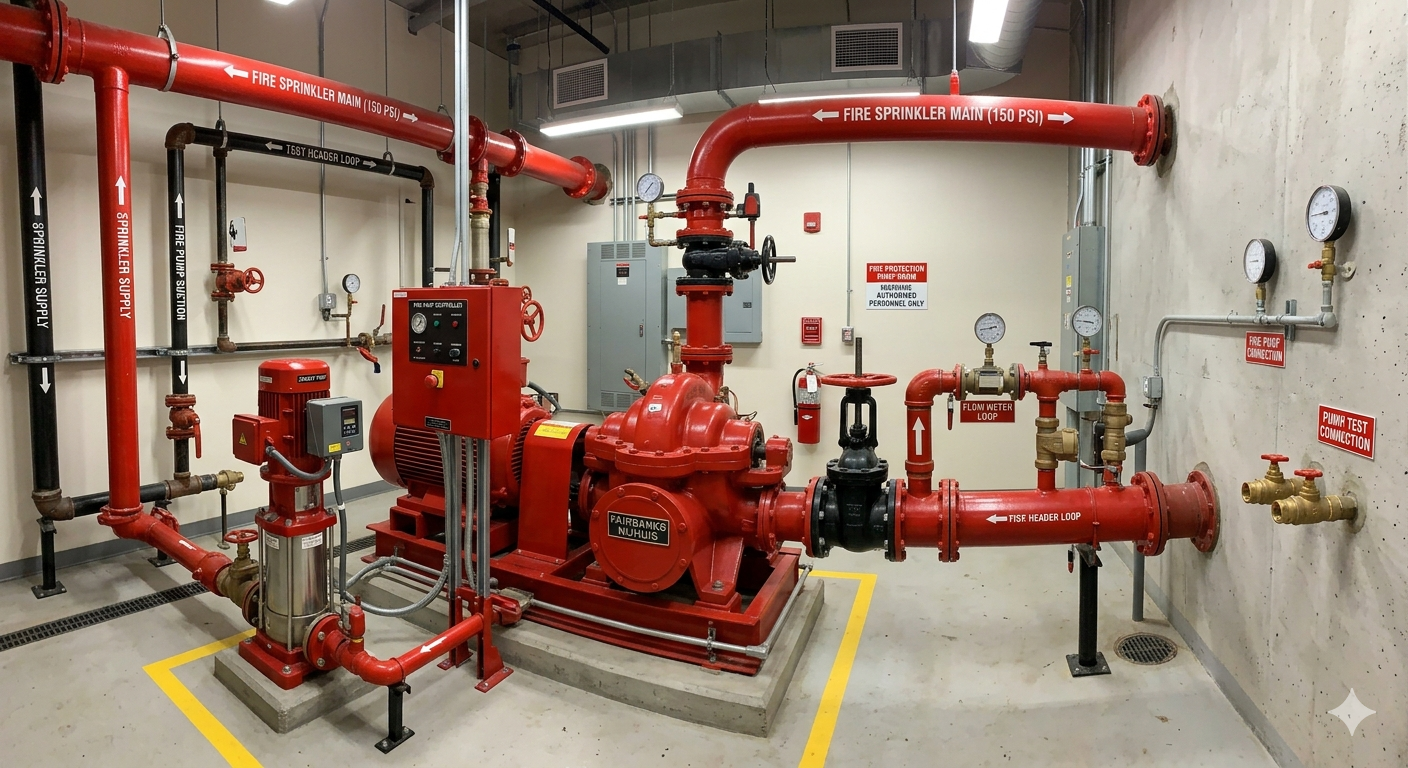
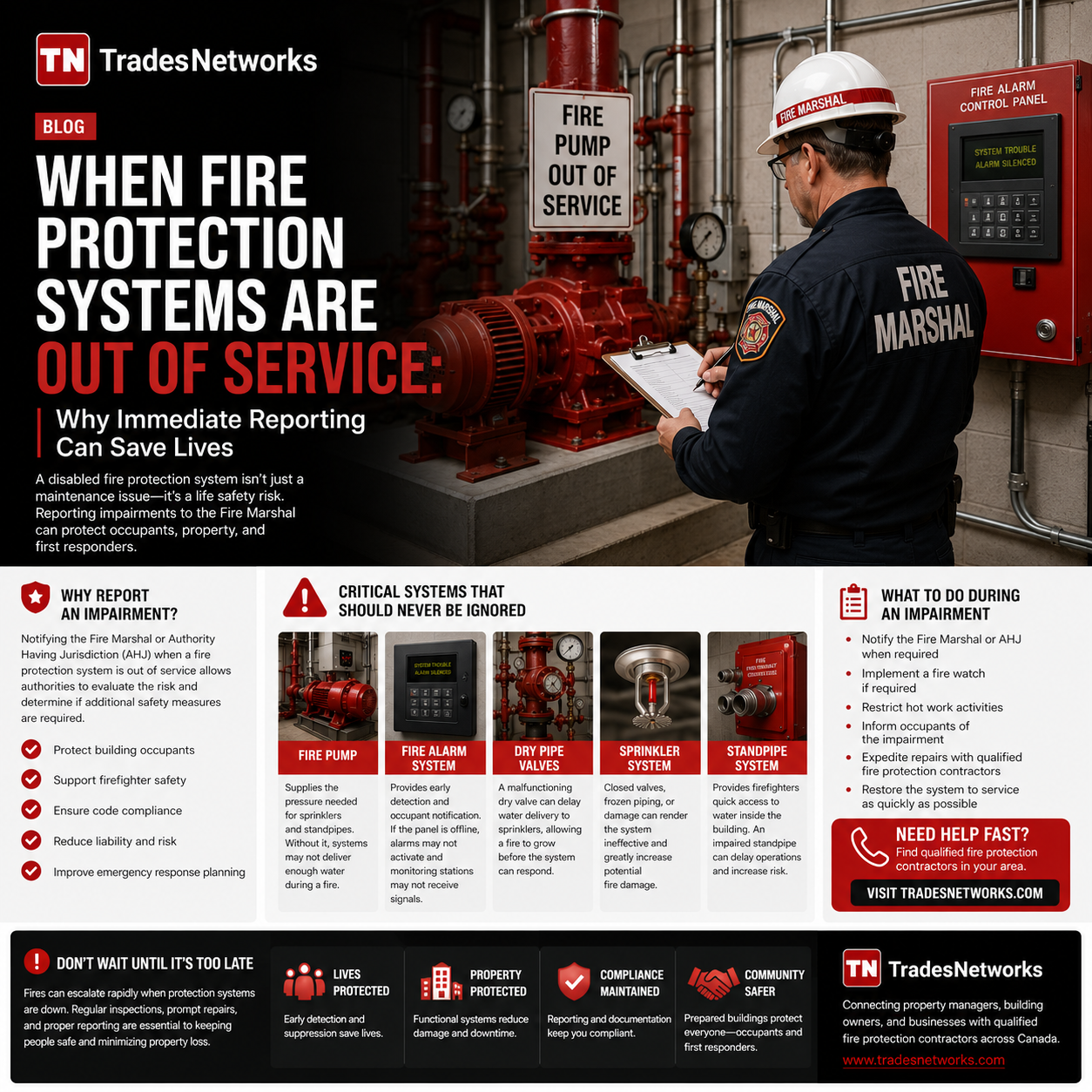
Every fire protection system in a building — the fire pump, dry pipe valves, the fire alarm panel — exists for one moment: the moment something goes wrong. When any of these systems are out of service, that moment of protection disappears, and the building is operating on borrowed time.
What Counts as an Impairment
An impairment is any condition that takes a fire protection system, or part of it, out of full working order. Common examples property managers encounter include:
A fire pump offline for repair, testing, or power issues
A dry valve tripped, drained, or under maintenance
A fire alarm panel in trouble or supervisory condition, or disconnected during work
A sprinkler system shut down for renovations or leak repair
Even a partial impairment — one zone, one floor, one component — reduces the level of protection for the entire building.
Why Immediate Reporting Matters
The Ontario Fire Code requires that the fire department be notified when a fire protection system is impaired. This isn't a bureaucratic formality. Here's what's actually at stake:
Response readiness. If a fire pump or valve is down and a fire happens before the fire department knows, first responders arrive expecting full system function that isn't there. That gap can cost critical minutes.
Legal accountability. Under O. Reg. 87/25 and the Ontario Fire Code, failing to report impairments can expose property owners and managers to liability, fines, and orders from the Fire Marshal's office.
Insurance implications. Many insurance policies require documented compliance with fire code reporting. An unreported impairment can jeopardize coverage in the event of a loss.
Life safety. Ultimately, this is about the people inside the building. A dry valve or fire pump failure during an actual fire event, combined with a delayed emergency response, is a worst-case scenario that proper reporting helps prevent.
The Reporting Process, Simplified
Identify the impairment as soon as it's discovered — during inspection, testing, or maintenance.
Notify the fire department or local Fire Marshal's office immediately, per your municipality's reporting procedure.
Post required signage or notices where applicable, indicating the system is out of service.
Implement interim fire watch or compensating measures if required, especially for extended impairments.
Document everything — the notification, the reason, the expected restoration time, and the qualified contractor handling repairs.
Confirm restoration with the fire department once the system is back in full service.
Working with a Qualified Contractor
Timely repairs depend on having a qualified fire protection contractor who can respond quickly and restore systems to full function. Delayed repairs mean delayed restoration of protection — and every day a system stays impaired is a day of added risk.
The Bottom Line
Fire pumps, dry valves, and fire alarm panels are the backbone of a building's fire protection strategy. When they go down, reporting isn't optional — it's the difference between a building that's protected on paper and one that's actually protected. Property managers who treat impairment reporting as a priority, not an afterthought, are protecting their tenants, their liability, and their peace of mind.